
STEM/Robotics – Building and Solving Problems
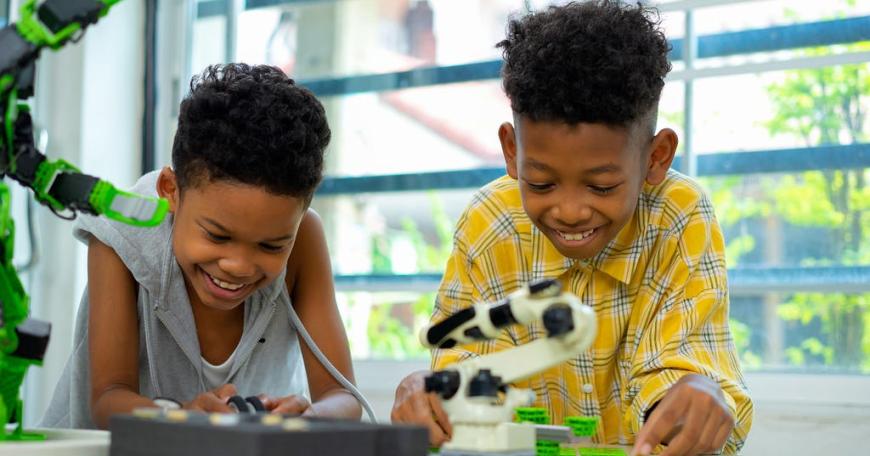
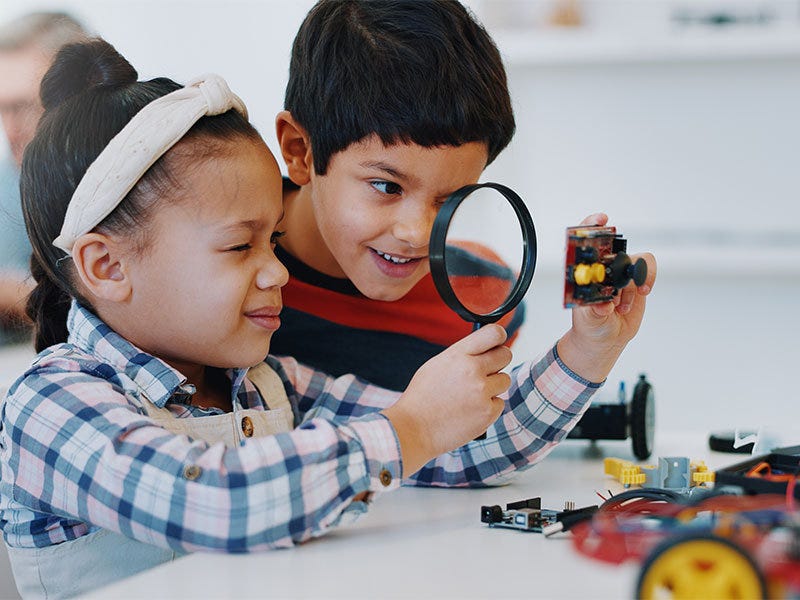
Students collaborate to design, build, and program simple robots that solve real-world challenges by applying engineering practices, iterative testing, and critical problem‑solving skills.
Helps students to learn about science, technology, engineering, and math through fun projects in robotics. Kids learn how to build things and solve problems creatively.
The primary goals for a STEM/Robotics instructor in Engineering & Problem Solving are to design and deliver rigorous, standards-aligned learning experiences that develop students’ engineering design mindset, computational thinking, and collaboration skills. Instructors will guide students to define problems, generate and evaluate multiple solutions, build and iterate prototypes, and use data to optimize designs; additionally, teachers will integrate safety protocols, equitable access to tools, and strategies for differentiating instruction across varied learner needs. Goals include measurable outcomes such as students demonstrating the engineering design process in at least three project cycles per term, effectively documenting iterations in engineering notebooks, and presenting evidence-based reflections on performance and learning gains.
Instructional Focus & Teacher Practices
Teachers should center instruction on project-based learning, inquiry-driven labs, and formative assessment cycles that reveal student thinking and inform targeted interventions. Effective practice includes scaffolding problem decomposition, modeling debugging and troubleshooting strategies, using rubrics that assess both technical skills and collaboration, and facilitating student-led testing and data analysis to refine designs. Professional staff goals also include maintaining industry-relevant tools and curricula, committing to ongoing PD in robotics platforms and accessible technologies, and partnering with community or industry mentors to extend authentic engineering experiences.

NYC DOE Standards Alignment
Align instructional units to the NYC DOE Scope and Sequence and the NYC DOE Science Learning Standards for grades served, emphasizing practices such as “Asking Questions and Defining Problems,” “Developing and Using Models,” and “Constructing Explanations and Designing Solutions.” Ensure coherence with the NYC DOE’s expectations for science and engineering by mapping unit outcomes to corresponding standards and performance expectations, embedding crosscutting concepts (e.g., systems and system models), and using the NYC DOE suggested exemplars for formative and summative assessment. Teachers must document standard mappings for each unit and submit curriculum plans that show explicit connections between project objectives, assessment criteria, and the relevant NYC DOE